
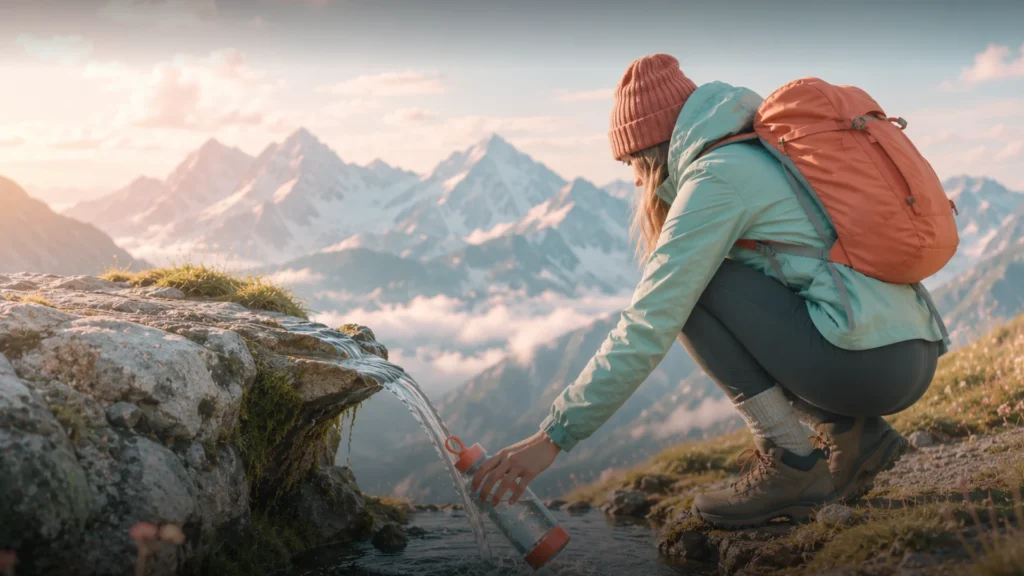
After all, what could be cleaner than water flowing straight out of the mountain? But can you really drink it without a second thought?
Crystal-Clear Water Isn’t Always Safe
One of the most common mistakes on a hike is judging water quality by how it looks. Largely because we’re used to trusting our own eyes.
If water is clear, odorless, and looks clean, it seems perfectly fine to drink.
Yet bacteria, viruses, and other microorganisms can’t be seen with the naked eye. So even water that looks flawlessly clean may harbor the agents of intestinal infections.
“I’ve Drunk Water Like This Before and I Was Fine”
It’s true — plenty of people drink from mountain springs for years and never run into trouble.
But the absence of symptoms in the past is no guarantee that the next spring will be safe. Water quality can be shaped by all sorts of factors: heavy rain, melting snow, animals upstream, and the particular features of a given source.
So the fact that such water caused no problems before does not mean it will be safe this time around.
When Might the Risk Be Higher?
Take extra care after heavy rain and during periods of active snowmelt. At such times, various contaminants from the soil surface can wash into the water.
The risk may also be higher on popular tourist routes and near grazing areas. Even if a spring sits high in the mountains and looks perfectly clean, there’s no way to know for certain what lies upstream.
What Can Happen After Drinking Such Water?
Most often it comes down to intestinal infections. After drinking contaminated water, you may develop:
- nausea;
- vomiting;
- abdominal pain;
- diarrhea;
- fever;
- general weakness.
Sometimes symptoms show up within a few hours, and sometimes only several days after the hike. That’s why people don’t always link feeling unwell to the water from the spring.
How Can You Lower the Risk on a Hike?
The most reliable option is to carry enough drinking water with you.
Before setting out, it helps to study the route in advance and find out whether it has reliable sources of drinking water.
If the route is long, consider using dedicated trekking filters or other water-purification methods made for backcountry conditions.
A Gastroenterologist at SILK Medical
If you develop abdominal pain, nausea, diarrhea, or other gastrointestinal symptoms after a hike, a trip, or time spent outdoors, don’t resort to self-treatment.
SILK Medical doctors will help pinpoint the cause of your complaints, order the necessary tests, and, if needed, choose a course of treatment.
It’s especially important to see a specialist if symptoms persist for several days, come with a fever, or are accompanied by signs of dehydration.